
The Autumn Moon
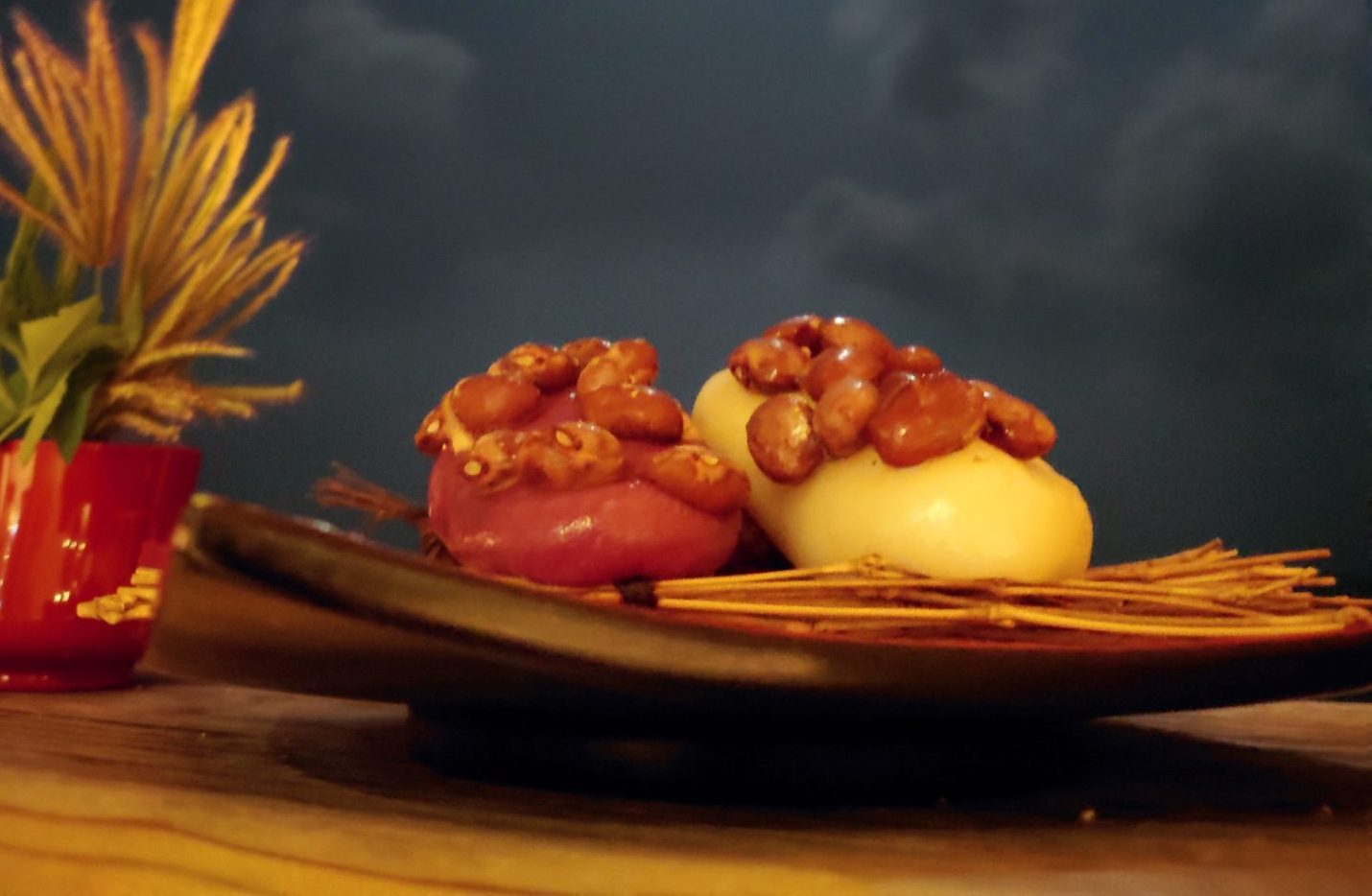
The fifteenth night of the eighth month of the old calendar is said to be when the moon looks its loveliest of the whole year, and so its moon is called chushu no meigetsu, “the bright moon of mid-autumn”.
The custom of viewing the moon on that night, jugoya (“the fifteenth night”), is observed throughout Japan, and this year it falls on 29 September.
Okinawa, like the rest of the country, has its own moon-viewing custom, chichi-ugami (“worshipping the moon”), in which people give thanks to the moon for watching over them day by day. But instead of the tsukimi dango of mainland Japan, the offering here is something quite different: fuchagi.
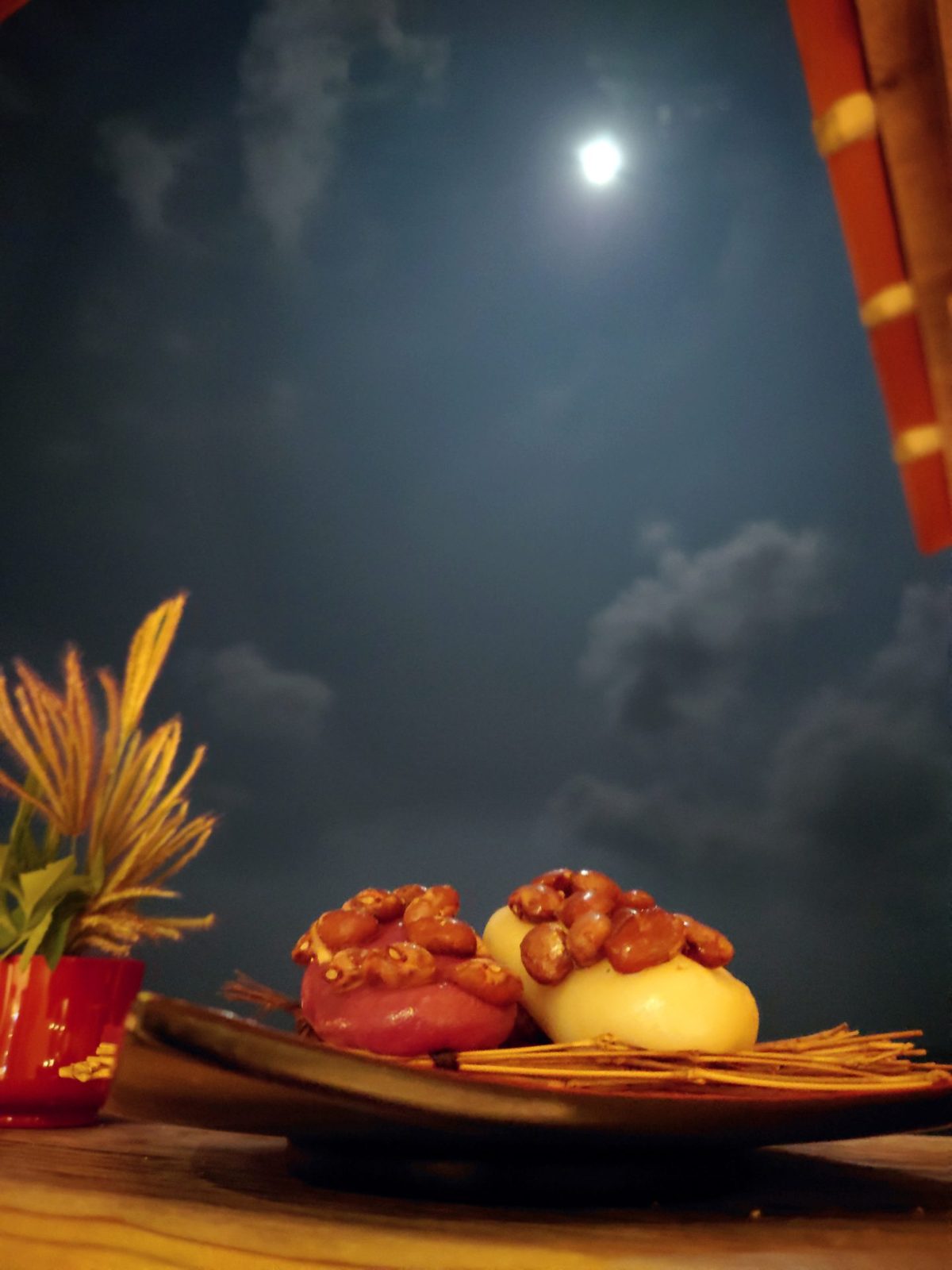
Fuchagi are made from glutinous rice flour, kneaded and steamed, then coated with boiled azuki beans. The azuki are believed to ward off evil, and by coating the mochi with whole, unmashed beans, people pray to be spared misfortune in the year ahead.
They are a lucky food, eaten after being offered, with prayers for a good harvest and a prosperous household, to Hinukan (the hearth god), the family Buddhist altar and the household Shinto altar.
We prepare fuchagi for our staying guests too, so that they can share in chichi-ugami.
This year the night falls exactly on the full moon, so wherever the sky is clear, you should be able to enjoy a perfectly round moon.